-
 中文
中文
 EN
EN
- Hotline : 0086 13929201380
- E-mail : susan@zkhtdefoamer.com gdzhonglianbang@gmail.com
-

-
ZILIBON DEFOAMER CHEMICAL
中文
EN
Foam in wastewater treatment is more than an eyesore. It reduces tank capacity, interferes with aeration efficiency, causes overflow onto walkways creating safety hazards, and can lead to non-compliance with discharge regulations. For treatment plants handling industrial effluent, uncontrolled foam is one of the leading causes of operational disruption and increased chemical costs.
Wastewater contains surfactants, proteins, suspended solids, and biological byproducts that stabilize foam. Common foam triggers include:
High surfactant load from industrial discharge (textile, paper, food processing)
Aeration systems that continuously inject air into the tank
Biological foaming caused by filamentous bacteria in activated sludge
Temperature and pH fluctuations that destabilize the system
In practice, you can quickly identify the source of foaming by observing its visual characteristics. Foam generally falls into three categories: Surface foam typically appears as large, loose bubbles floating on the water surface, primarily caused by surfactant contamination or splashing; Biological foam presents as a thick, viscous, brownish scum, usually triggered by filamentous bacteria in activated sludge; while Chemical foam is characterized by dense, stable white foam, commonly found in industrial effluent with high surfactant concentrations. Please refer to the image below for a visual comparison of these characteristics:
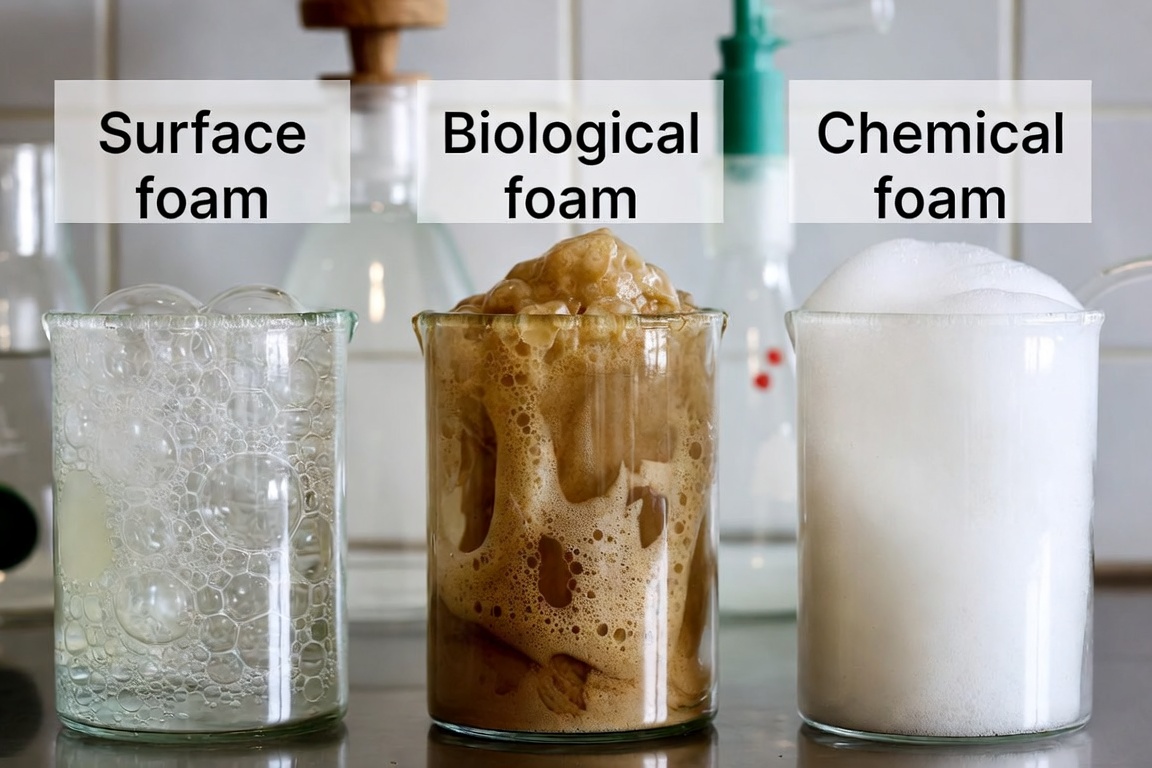
Comparison of 3 common wastewater foam types
Surface foam responds quickly to most defoamers. Biological and chemical foams require a product with strong penetration and long-lasting suppression.
silicone defoamers are built on a polysiloxane backbone with low surface tension and weak intermolecular forces. This molecular structure allows them to spread rapidly across foam lamellae, rupturing bubbles on contact.
Key advantages for wastewater applications:
Thermal stability: Performance remains consistent across a wide temperature range.
It maintains good defoaming stability over a wide pH range; specific performance depends on the product formulation and the wastewater system.
Fast knockdown: Low surface tension enables immediate foam collapse.
Modified dispersibility: Emulsified or polyether-modified grades disperse uniformly in aqueous systems, reducing the risk of surface residue.
Recommended dosage: 10–100 ppm (0.001%–0.01% by weight), depending on foam severity. Start at the low end and adjust incrementally.
Compatibility test procedure:
Add the defoamer to a wastewater sample at the recommended dosage.
Observe foam knockdown within 30 seconds.
Let the sample stand for 2–4 hours and check for foam rebound.
Verify no oil separation, sludge disruption, or COD increase.
If foam stays controlled and water quality parameters remain stable, the product is compatible.
A textile wastewater treatment plant in Southeast Asia struggled with dense chemical foam caused by high surfactant load from dyeing effluent. Their previous defoamer required frequent re-dosing and left oily residue on the tank surface. After switching to our polyether-modified silicone defoamer, foam was eliminated within 30 seconds, no surface residue was observed, and monthly defoamer consumption dropped by 40%.
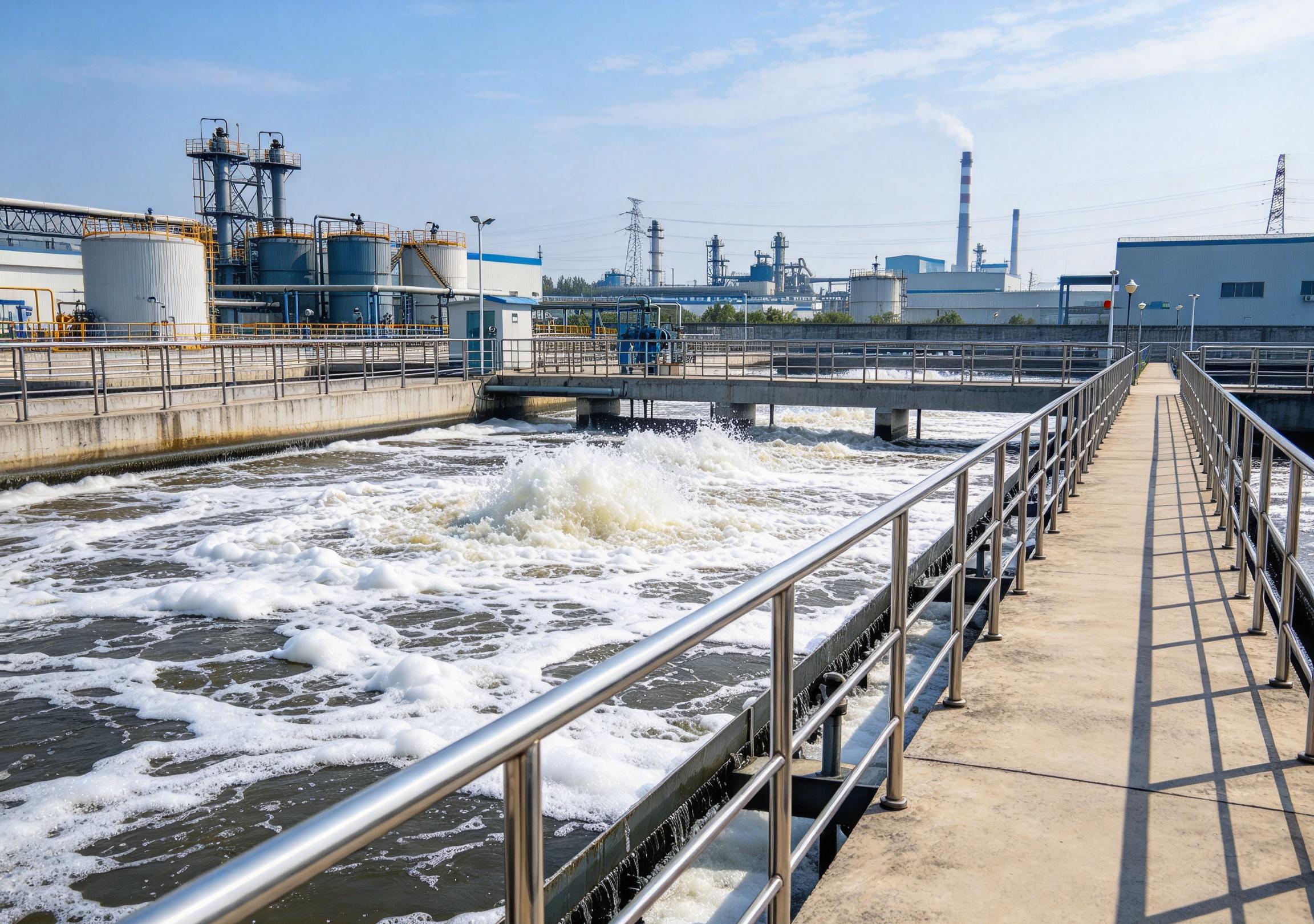
Severe foam overflow in the aeration tank
Every wastewater system is unique. Not sure which defoamer fits your wastewater system? Send us your water details (source, pH, temperature, foam type, current treatment process), and our technical team will recommend the right grade or arrange a free lab test.
Q1: Will silicone defoamer cause oil slick on the water surface?
A: Properly formulated emulsified grades disperse uniformly in wastewater and do not cause surface oil slick. However, over-dosing or using a non-emulsified grade in low-surfactant water may lead to floating residue. Always run a jar test before full-scale application.
Q2: Can silicone defoamer be used in biological treatment systems?
A: Yes. Biocompatible silicone defoamers are designed not to inhibit microbial activity in activated sludge. They are widely used in municipal sewage plants and industrial biological treatment processes. Avoid solvent-based grades, which may harm microorganisms.
Q3: How long does the defoaming effect last?
A: Knockdown is typically immediate (within seconds). Suppression duration depends on wastewater composition and aeration intensity, usually lasting 2–6 hours. For continuous aeration systems, consider automated dosing or a sustained-release grade.