-
 中文
中文
 EN
EN
- Hotline : 0086 13929201380
- E-mail : susan@zkhtdefoamer.com gdzhonglianbang@gmail.com
-

-
ZILIBON DEFOAMER CHEMICAL
中文
EN
In industrial manufacturing, foam isn't just a nuisance—it's a production killer. Whether you are running a wastewater treatment plant or coating high-gloss furniture, uncontrolled foam leads to overflow, reduced equipment efficiency, and product defects.
Many facilities struggle because they treat all defoamers (antifoams) as the same. However, selecting the wrong type can cause issues worse than the foam itself, such as surface defects or separation. This guide breaks down defoamer selection into three practical dimensions to help you make the right choice.
The compatibility of the defoamer with your system is the first checkpoint. If the carrier fluid doesn't match, the product will fail immediately:
Water-Based Defoamers: These are the most versatile and widely used in industries like wastewater treatment, water-based coatings, metalworking fluids, and fermentation. They offer excellent dispersibility in water systems with low dosage requirements, making them ideal for general aqueous processes.
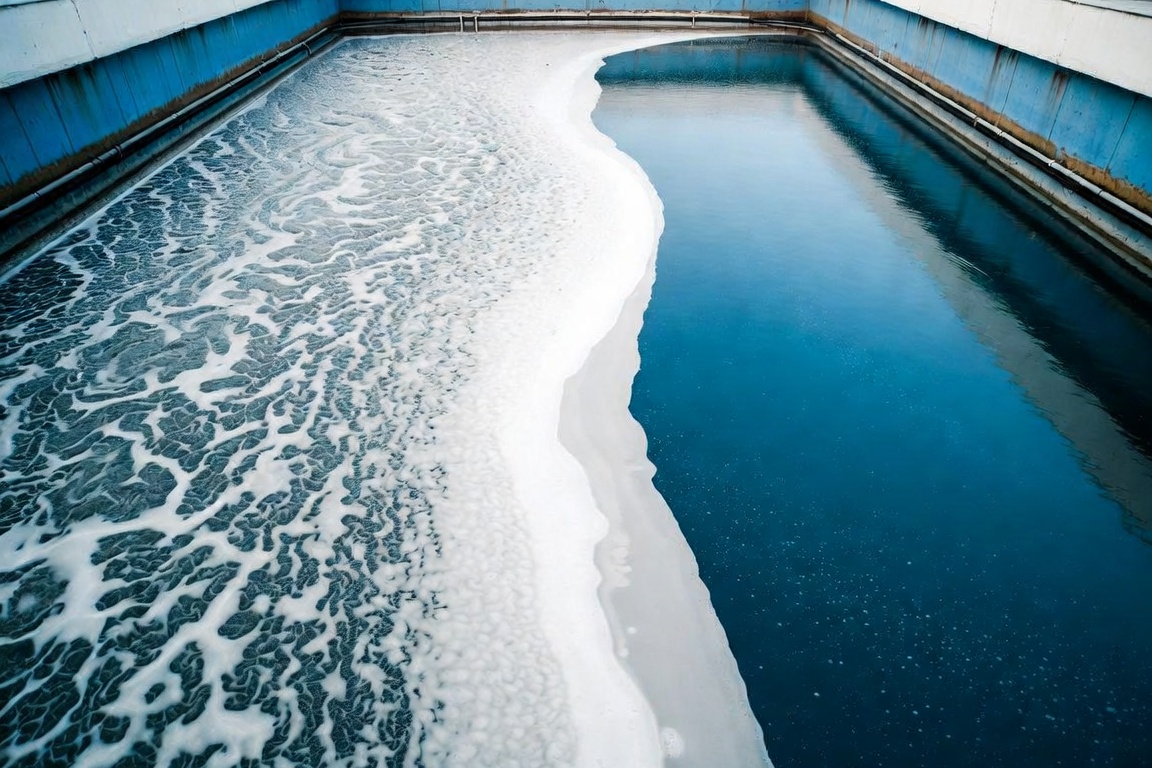
Foam control results: Heavy foam accumulation (left) vs. clear water surface (right)
Oil-Based Defoamers: Formulated with mineral oils or modified vegetable oils, these are designed specifically for non-aqueous systems like oil-based paints, petroleum processing, and oily slurries. They provide fast knockdown of foam in hydrophobic environments. Warning: Never use these in water-based systems, as mixing them can cause separation and floating oil layers.For coating and precision processing industries, the chemical composition dictates the final surface quality:
Your process environment determines the durability of the defoamer:
Don't fall into the trap of looking for a "one-size-fits-all" product. A silicone defoamer might be cheap and effective for sewage, but it will ruin a batch of high-gloss varnish.
Is your system water-based or oil-based?
Is surface appearance critical (silicone-free required)?
Are there extreme temperatures or biological sensitivities?
Pro Tip: Always conduct a jar test or pilot trial before full-scale adoption to verify compatibility and performance.
Can I interchange different types of defoamers?
Generally, no. Switching between water/oil bases or silicone/silicone-free types without testing can lead to immediate failure, separation, or surface defects.
Which defoamer is best for high-gloss wood lacquer?
You should prioritize silicone-free defoamers. They prevent surface defects like craters and ensure good recoatability and gloss retention.