-
 中文
中文
 EN
EN
- Hotline : 0086 13929201380
- E-mail : susan@zkhtdefoamer.com gdzhonglianbang@gmail.com
-

-
ZILIBON DEFOAMER CHEMICAL
中文
EN
In industrial metal cleaning facilities, when technicians encounter recurring foam, their first instinct is usually to increase the defoamer dosage. However, in actual production, it is common to see situations where large amounts of additives are used, yet foam continues to overflow, causing stains on workpieces and forcing the premature disposal of the cleaning bath.
More often than not, the issue isn't the dosage, but rather failing to select a metal cleaning defoamer that is compatible with the specific chemical system. Blindly adding more antifoam can actually trigger new production faults.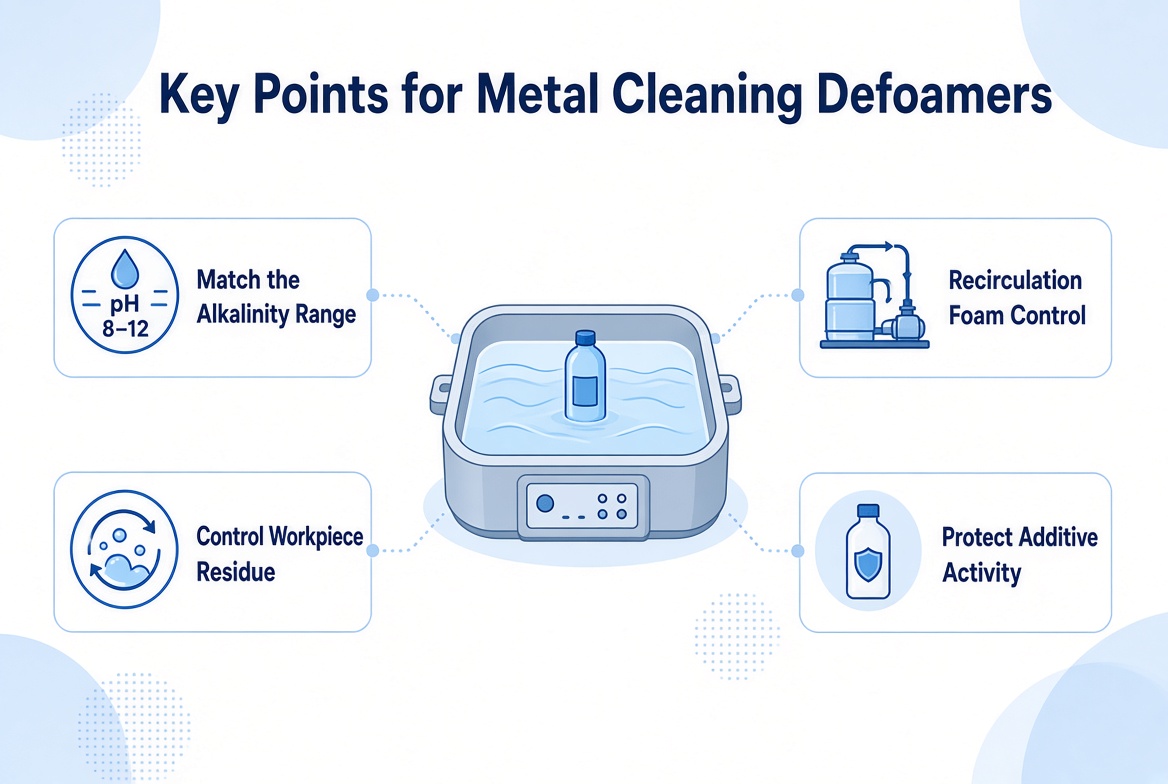
Infographic of key application points for metal cleaning defoamers
Metal cleaning formulations are complex; both alkalinity and surfactants affect foam generation. Generic defoamers can only temporarily suppress surface foam. When faced with high-pressure spray impact or ultrasonic vibration, they quickly fail to prevent re-foaming. If the product has poor compatibility with the cleaning bath, increasing the dosage will lead to side effects like oil separation or spotting. Effective foam management requires stepping out of the "more is better" mindset and selecting a metal cleaning defoamer based on actual operating conditions.
. Match the Alkalinity Range of the Cleaning Bath
Alkalinity varies significantly across different degreasing formulations. There is no single metal cleaning defoamer that fits all alkaline environments. For high-alkaline tanks, it is mandatory to use an alkali-resistant formulation to prevent rapid decomposition and loss of effectiveness.
. Focus on Foam Suppression Under Continuous Circulation
Static beaker tests are only for reference. High-pressure spray impacts and ultrasonic vibrations will consume the active substances in the defoamer. It is crucial to evaluate the foam control performance after continuous system circulation.
. Prevent Workpiece Surface Residue Risks
After cleaning, workpieces usually enter painting or plating processes. If the defoamer separates and adheres to the surface, it can cause pinholes, peeling, and other coating defects. Achieving foam control while ensuring the workpiece surface remains pristine is equally important.
. Protect the Activity of Cleaning Additives
A qualified metal cleaning defoamer will not deplete the active components of the cleaner. It should help delay the aging of the cleaning bath, reduce the frequency of bath changes, and ultimately control overall production costs.
Blindly increasing dosage when foam bounces back: If compatibility is insufficient, increasing the dosage will only worsen separation. The correct action is to switch to a compatible model.
Relying solely on static beaker tests: This ignores dynamic production conditions like high-pressure spraying and ultrasonics.
Using a single defoamer for all cleaning tanks: This ignores the differences in alkalinity and process parameters across different tanks.
Pursuing rapid defoaming at the expense of residue: Ignoring workpiece residue can cause severe hidden risks for downstream processing.
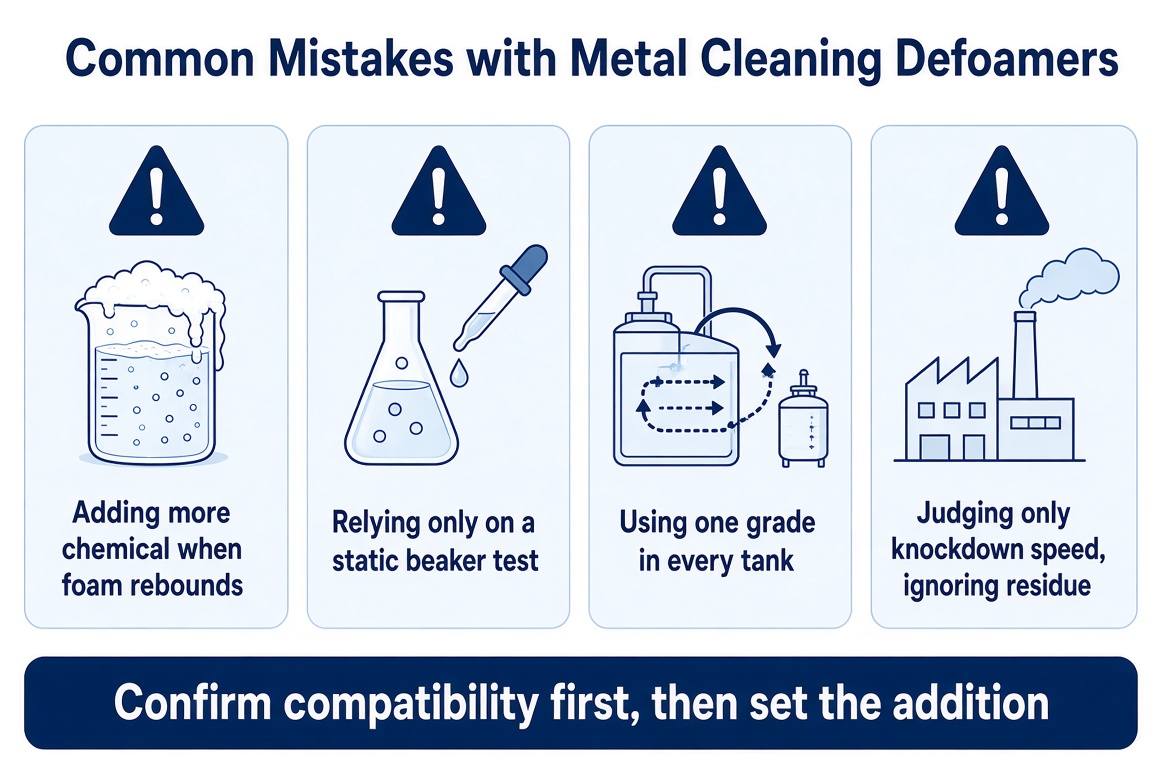
Treating metal cleaning foam is not just about eliminating surface bubbles. The core value of a metal cleaning defoamer lies in alkali stability, shear resistance, and low residue, without disrupting the original cleaning system. Blindly increasing dosage is merely a temporary fix. Choosing the right compatible product is the only way to stabilize your production line and reduce manufacturing losses.
Q1: Can I use one defoamer for all my cleaning tanks?
A: It depends on the chemistry. We do not recommend using a universal defoamer for all tanks without testing first. Different tanks often have vastly different alkalinity (pH levels) and processes. Small-scale validation is always recommended to ensure compatibility.
Q2: Why does the foam return shortly after adding the defoamer?
A: This is usually due to insufficient alkali resistance or shear stability. The active ingredients are being consumed by the harsh system environment. You need to switch to a defoamer specifically formulated for your operating conditions.
Q3: How can I quickly check if a defoamer poses a residue risk?
A: After a small-scale test, dry the workpiece completely and inspect the surface for any oil spots or hazy films. This is a reliable preliminary indicator of residue risk.