-
 中文
中文
 EN
EN
- Hotline : 0086 13929201380
- E-mail : susan@zkhtdefoamer.com gdzhonglianbang@gmail.com
-

-
ZILIBON DEFOAMER CHEMICAL
中文
EN
Foam on a CNC line is not only messy. High-pressure coolant, short tank time, and long fluid life keep pushing air into the system. When foam builds up, cooling drops, tanks overflow, sensors trip, and a thin oil film can stay on the machine or the part.
That film becomes a second problem. Parts that look clean enough in the shop can fail later in washing or painting.
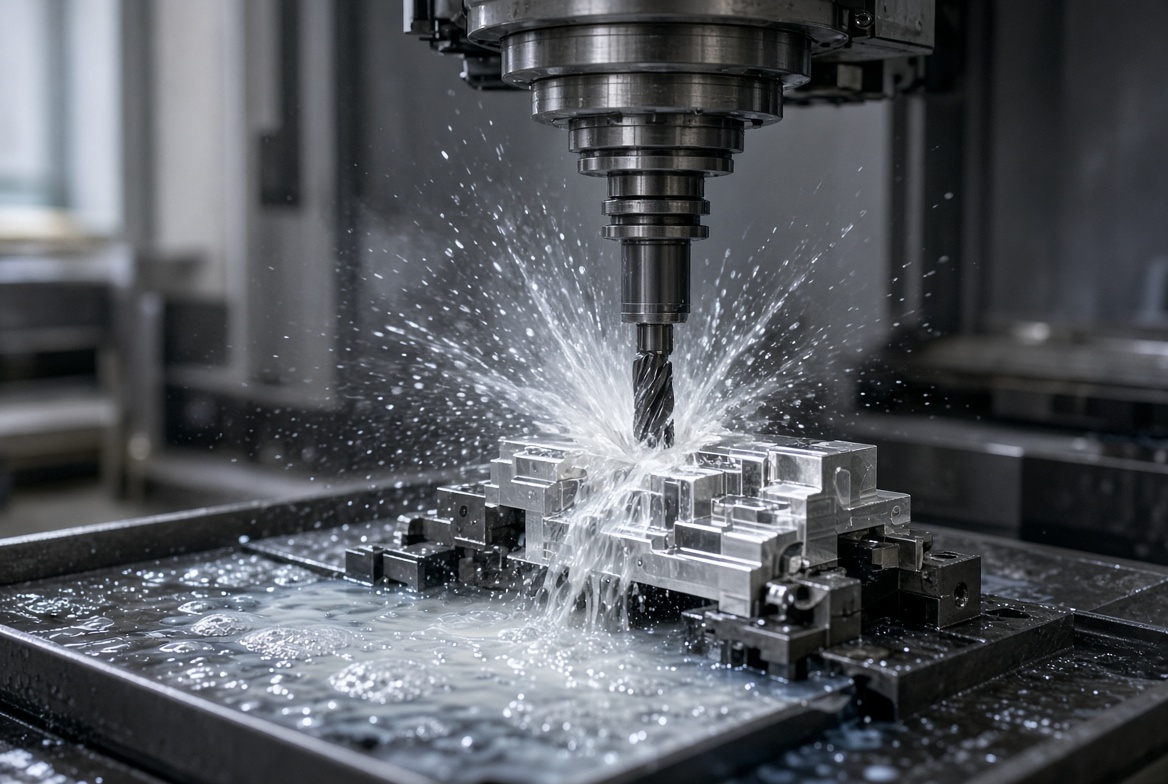
CNC machining with high-pressure metalworking fluid in action
A metalworking fluid is not a simple water tank. Semi-synthetic coolants, emulsified oils, fully synthetic fluids, saponified oils, lubricants, and antifreeze systems hold foam in different ways.
A defoamer that works in a beaker can still fail on the machine if it floats after storage, breaks the emulsion, loses effect after high-pressure spraying, turns a clear fluid hazy, or leaves a film that hurts rust protection and coating.
The right question is not only “Can it kill foam?” It is “Can it kill foam without creating the next defect?”
An effective metalworking fluid defoamer should:
· Knock foam down quickly when the pump starts
· Keep foam down through a full shift
· Stay stable under shear and high-pressure spray
· Mix well with emulsified oils and leave no floating oil
· Protect lubrication, cooling, cleaning, and rust prevention
· Stay compatible with later metal cleaning or painting
Different fluids still need different grades. Emulsified oils need shear stability. Clear synthetic fluids need compatibility without haze. Saponified oils and lubricants need clean mixing so the machine surface stays free of oil. Antifreeze systems need heat stability and no sedimentation after storage.
A high-pressure machining center may run well at the start of the week. By mid-week, foam sits on the tank. Operators slow the fill rate. A light oil film appears around the machine. Adding more defoamer knocks the foam down for a short time, then the foam returns. If the product is wrong, it starts to float and the next wash or paint process shows defects.
The fix is usually not a higher dose. It is a defoamer matched to the fluid and the machine. Once the grade fits the system, foam stays lower, the tank surface stays cleaner, and the coolant can keep cooling and lubricating the tool.
We do not publish a one-formula answer here, because the wrong grade can float, haze, or fail under shear. To recommend a direction, send a short process note:
· Fluid type
· High-pressure single machine or central system
· Current problem: overflow, sensor trip, oil floating, haze, or paint defects
· Next process: cleaning, coating, or rust prevention only
Zilibon develops customized foam-control solutions for metalworking fluids, industrial cleaning, and other process industries. If coolant foam is costing tank capacity, tool life, or coating quality, contact us for sample evaluation and technical support.