-
 中文
中文
 EN
EN
- Hotline : 0086 13929201380
- E-mail : susan@zkhtdefoamer.com gdzhonglianbang@gmail.com
-

-
ZILIBON DEFOAMER CHEMICAL
中文
EN
In water treatment engineering, foam is more than just a visual nuisance; it is a silent killer that reduces aeration efficiency, causes pump cavitation, and can even lead to effluent exceeding discharge standards. As a water treatment engineer or procurement specialist, have you ever wondered: Why do some defoamers work instantly but fade quickly? Why do some leave no oil slick but risk clogging membranes?
The answer lies in the chemistry. Moving beyond dry textbook definitions, this guide analyzes the chemical mechanisms and selection logic of four mainstream water treatment defoamers from a practical application perspective.
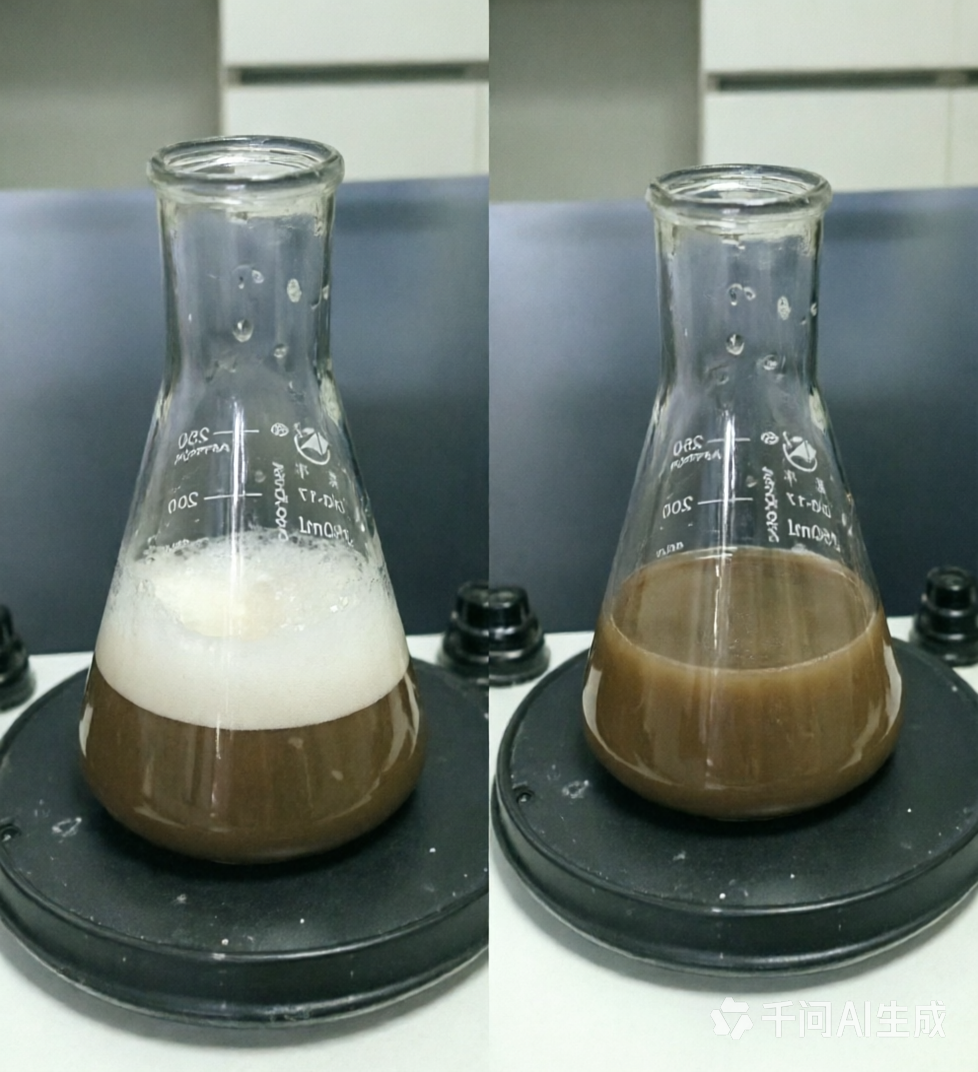
Polyether defoamers are often the first choice for Reverse Osmosis (RO) systems or high-temperature fermentation wastewater.
Core Mechanism: They are primarily composed of block copolymers of Propylene Oxide (PO) and Ethylene Oxide (EO), such as GPE (Glycerol Polyether).
Unique "Inverse Solubility": This is the most fascinating property of polyethers. They are soluble in water at low temperatures but precipitate out above their "Cloud Point" to form microscopic hydrophobic droplets. This allows them to precisely target and break foam at high temperatures.
Practical Tip: Being silicone-free, they completely eliminate the risk of silicone fouling on membrane elements. However, be aware that their performance may drop in cold wastewater due to high solubility.
If you need instant knockdown power, silicone-based defoamers are often irreplaceable.
Key Ingredients: The active agent is primarily Polydimethylsiloxane (PDMS), with the chemical formula (CH3)3SiO[Si(CH3)2O]nSi(CH3)3. To enhance efficacy, hydrophobic silica (SiO2) particles are usually compounded into the mix.
Form Matters: In water treatment, we mostly use Silicone Emulsions. Emulsifiers disperse the hydrophobic silicone oil into micron-sized particles. Smaller particle size means better stability, while moderate sizing often yields better knockdown performance.
Caution: While highly efficient, overdosing or using them in precision filtration systems can cause "silicone spots" on filter cloths or membranes. Strict dosage control (typically 10-50 ppm) is essential.
For complex industrial wastewater (like textile dyeing or paper mill white water), mineral oil-based defoamers hold a large market share due to their cost-efficiency.
Formulation Logic: Carrier Oil (Saturated Hydrocarbons) + Hydrophobic Particles (e.g., Metal Stearates C17H35COO-M+, Paraffin Wax).
Synergistic Effect: The hydrophobic particles act as "needles" that enter the bubble lamella to disrupt surface tension balance, while the mineral oil serves as the carrier for rapid spreading.
Practical Tip: Emulsion stability is critical here. Poor emulsification can lead to "oil slicking" (floating oil), which affects downstream biological treatment. A static separation test is recommended before bulk purchasing.
Chemical Profile: Represented by Isooctanol, n-Butanol, or long-chain fatty alcohols (C8-C10). Their simple molecular structure allows for extremely fast diffusion rates.
Application Scenario: They are typically used as "primary defoamers" or for rapid foam suppression in the early stages of fermentation.
Limitation: Due to higher volatility and water solubility, their longevity (anti-foaming duration) is generally shorter than the other three types, so they often appear as part of a compounded formula.
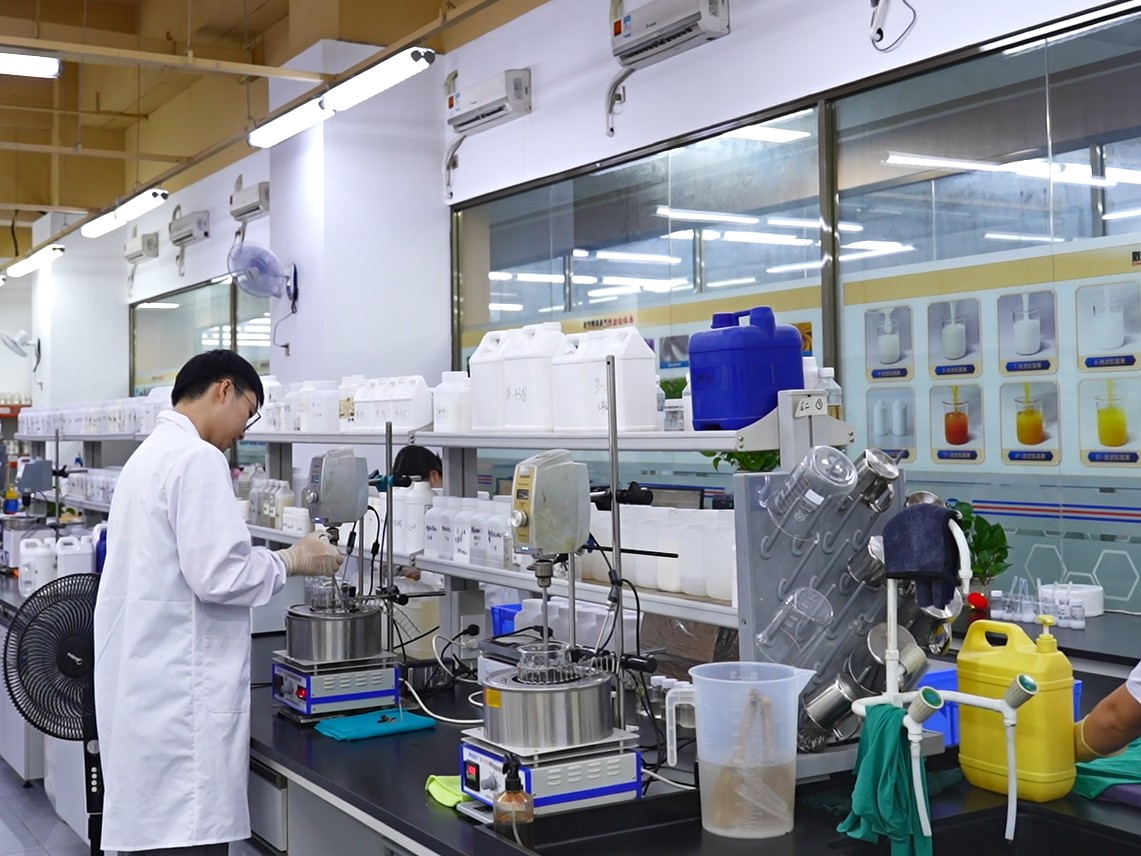
When selecting a water treatment defoamer, don't just look at the spec sheet—consider your specific operating conditions:
Have an RO/Membrane system? Go for Polyethers.
Need instant knockdown for massive foam? Silicone Emulsion is your best bet.
Cost-sensitive with complex water quality? Mineral Oil-based is worth a try.
We hope this deep dive into chemical essentials provides practical value for optimizing your water treatment process.